
|
Paslaugos |
Kaulo priauginimo procedūros
Reguliuojama kaulo regeneracija (RKR)
Ši procedūra nukreipta tam, kad atstatyti žandikaulių trūkstamą kaulą ir sudaryti sąlyga tinkamam protezavimui ir ypač dantų implantacijai. Tai atliekama naudojant kaulą arba kaulo pakaitalus ir biologiškai suderinamas membranas, kurios neleidžia įaugti į defekto vietą minkštiems audiniams ir sudaro sąlygas kaului regeneruoti. RKR gali būti atliekama įvairiose žandikaulio vietose, naudojant įvairias technikas (“onlay”, “sandvich” ir kitos). RKR gali būti naudojama žandikaulio paruošimui prieš implantaciją (vėlyvoji implantacija) arba kartu su implantcija (vienmomentinė implantacija).
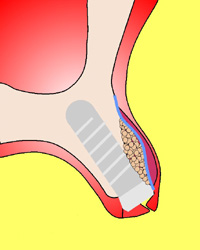
Sinuso dugno pakėlimo operacija:
Viena iš dažniausiai naudojamų kaulo priauginimo operacijų yra sinuso dugno pakėlimo operacija. Ši operacija yra atliekama tik viršutiniame žandikaulyje. Žmogui senstant viršutinio žandikaulio sinusai didėja, atrofuojasi kaulas, esantis viršutinio žandikaulio alveolinėje ataugoje. Tai nėra patologinė būklė, priešingai, tai atsitinka beveik kiekvienam. Šis procesas yra vadinamas viršutinio žandikaulio sinusų oringumo padidėjimas. Praradus dantis, esančius šioje srityje, gali iškilti sunkumų dantų implantacijai atlikti. Šiuo tikslu buvo sukurtas kaulo priauginimo metodas, kurio eigoje yra pastorinama sinuso apatinė sienelė arba kitaip sakant pakeliamas sinuso dugnas. Priaugus kaului po 6-8 mėnesių gali būti atliekama dantų implantacija. Sinuso dugno pakėlimas ir dantų implantacija gali būti atliekama vienu metu, jei viršutinio žandikaulio sinuso sienelė yra pakankamai stora, kad įsukus implantą, jis būtų stabilus.
|




|
Services
|
Bone grafting procedures
Guided Bone Regeneration (GBR) Procedure refers to procedures that attempt to regenerate bone prior to the placement of bridges or, more commonly, implants. This is accomplished using bone grafts and biocompatible membranes that keep out tissue and allow the bone to grow. GBR procedures involves alveolar bone regeneration or onlay grafts, sinuslifting procedures et cetera.
Sinus Augmentations: One of the most frequently applied grafting procedures is the Sinus Augmentation. This procedure is restricted only to the upper jaw. As we get older our sinuses grow larger in volume and literally take away valuable bone from the jaw ridge. This is not a pathological condition, on the very contrary, it happens to almost every one. This process is called Pneumatization of the Para-nasal sinuses.
Once teeth are lost in that particular area it makes it difficult if not impossible to place endosseous implants in that area. For this particular problem a grafting method was developed to literally raise the bottom of the sinus back up, graft bone underneath and, thus, create enough space for one or more dental implants. Sinus Augmentations and implant placement can sometimes be performed as a single procedure, if enough bone between the upper jaw ridge and the bottom of the sinus is available to stabilize the implant well. If not enough bone is available, the Sinus Augmentation will have to be performed first, then the graft will have to mature for several months (depending on the graft material used). Once the graft has matured the implants can be placed.
|


